



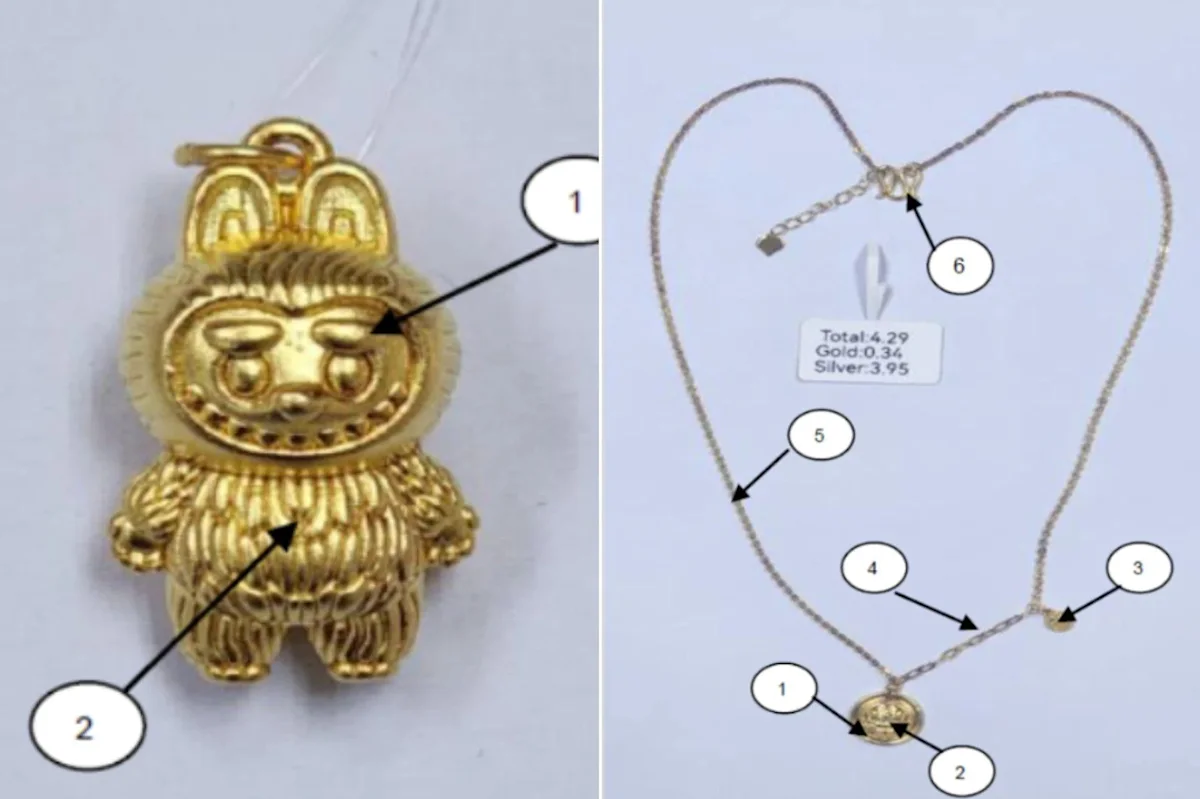

The Consumers Association of Singapore (CASE), Singapore Jewellers Association (SJA) and Singapore Pawnbrokers’ Association (SPA) have called for clearer descriptions of gold-wrapped silver jewellery after tests found substantial differences in the thickness of the gold layers on three products.
Tests Find Variations In Coating Thickness
Gold-wrapped silver jewellery consists of a silver core covered by a layer of gold that has been mechanically pressed or wrapped around it.
CASE commissioned a mystery shopping exercise involving three pieces, two purchased from physical retailers and one from an online platform.
Testing found that the exterior gold layers had a purity of between 98.4% and 99.9%, broadly matching the manufacturers’ stated specifications. However, their thickness ranged from 2.13 micrometres to 9.86 micrometres.
The organisations said the term ‘gold-wrapped’ could be unclear if manufacturers and retailers do not specify the amount of gold used or explain how it is bonded to the silver core.
The exercise covered only three pieces and does not represent the wider market. However, the results show that products sold under the same general description can have different specifications.
Certification and Disclosure Recommended
CASE, SJA and SPA advised consumers to request independent certification or assay reports confirming the purity, weight and composition of jewellery.
They also called on suppliers to disclose the thickness of the gold layer at the point of sale and provide independent evidence supporting their product claims.
CASE president Melvin Yong said: “When consumers buy jewellery, they should be able to understand clearly what they are paying for.
“Terms like ‘gold-wrapped’ can be confusing if sellers do not explain how much gold is actually on the item, or provide proper proof to back up their claims.”
SJA president Ho Nai Chuen said rising gold prices had increased demand for lower-cost jewellery, “creating opportunities for misleading and deceptive sales practices”.
He added that some products sold as gold-wrapped silver could be gold-plated. He said unclear terminology could lead customers to believe that they were buying solid gold jewellery.
Trade-In and Pawnbroking Restrictions
According to Ho Nai Chuen, gold-wrapped silver jewellery has no trade-in value. SPA president Ho Khiam Seng also said licensed pawnbrokers in Singapore do not accept these pieces as gold collateral.
Ho Khiam Seng noted that falsely representing an item as gold, or misrepresenting its gold content when pawning it, is an offence.
Customers may assume that jewellery with an exterior gold layer can be resold, exchanged or used as collateral in the same way as solid gold. Retailers have therefore been advised to set out any buyback, exchange and return terms in writing.
Implications for Jewellery Retailers
The advisory indicates that jewellers selling layered precious-metal products should use precise product descriptions. Online listings, labels and information provided by sales staff should distinguish between solid gold, gold-wrapped silver and gold-plated jewellery.
Stating only the purity of the exterior gold may not fully describe the product. Its specifications may also include the thickness of the layer, the bonding method, the core metal and any applicable after-sales terms.
The organisations recommended buying from businesses accredited under the CaseTrust-SJA scheme. Jewellers in the scheme are required to sell gold jewellery tested by accredited laboratories.
Under Singapore’s Consumer Protection (Fair Trading) Act, false or misleading product claims can constitute an unfair trade practice.
